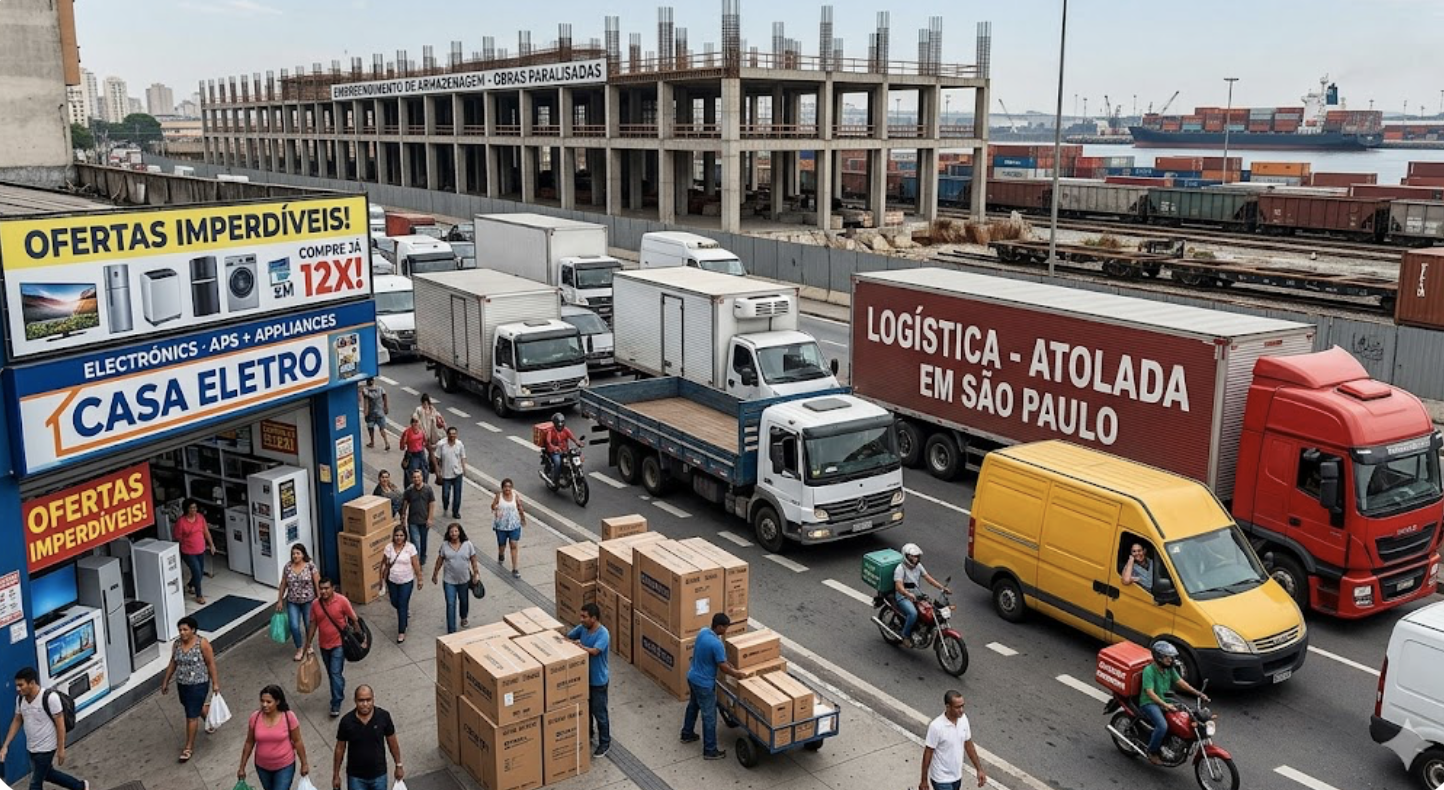
Stability raised demand, not capacity.
Brazil solved inflation, then stalled.
Brazil solved inflation in 1994, but it replaced one constraint with another. Consumption surged, but productive investment did not keep pace. The paradox was stark. Foreign reserves rose to $328 billion, while manufacturing capacity eroded and infrastructure gaps widened. These changes occurred because credit expanded faster than supply capacity and productivity could keep pace. Macro stability, credit growth, and commodity windfalls sustained demand, but they also pulled incentives toward consumption and natural resource extraction. The result was clear: Brazil stabilized consumption but neglected investment, limiting long-term growth and resilience. This blog explains what changed, what drove it, and what the state did.
Demand grew faster than supply.
Capital shifted toward credit and commodities.
After the Plano Real, Brazil restructured its capital base. Financial stability allowed foreign reserves to rise sharply, reaching $328 billion by 2011 and ending chronic balance-of-payments crises. Domestic credit also deepened, from roughly 20% of GDP in 2004 to nearly 49% by 2012. Consumer lending drove much of that expansion. External and domestic capital then flowed into oil, mining, and agribusiness because global demand was strong and returns were high.
Infrastructure stocks, however, lagged. Public investment was repeatedly compressed to meet fiscal targets, resulting in persistent logistics bottlenecks. Human capital also rose in quantity. Average schooling increased, and education spending rose from 4.6% to 6.1% of GDP. Yet, the quality of education remained too weak to support industrial upgrading. Consumption capacity expanded faster than productive capacity.
Institutions favored stability and household demand.
Brazil rebuilt its macroeconomic institutions around stability and predictability. The macroeconomic tripod – inflation targeting, a floating exchange rate, and primary fiscal surpluses – anchored expectations and restored credibility after the 1999 crisis. Fiscal governance also tightened through the Fiscal Responsibility Law, which enforced spending discipline across levels of government. These changes made the system more predictable.
At the same time, new financial and social institutions expanded household demand. Payroll-deductible lending reduced credit risk and scaled up borrowing. Bolsa Família also unified fragmented transfer programs in a national social registry. However, reform favored consumption and redistribution over productivity systems. The quality of education, the tax structure, and infrastructure governance remained weak or fragmented.
Rising incomes hid deeper structural weakness.
Brazil’s social structure shifted quickly toward a mass consumer society. Around 31.5 million people exited poverty, and inequality fell as wages rose, transfers expanded, and labor formalized. A new “Class C” emerged, and spending moved toward durable goods, telecommunications, and services. Overall, life changed for millions.
This shift depended heavily on commodity cycles and external demand, especially from China. Those forces drove export growth and improved the terms of trade. The 2008 global crisis then triggered countercyclical credit expansion, which reinforced the consumption boom. But the same cycle exposed a structural weakness. When external conditions weakened after 2011, high household leverage and low productivity constrained adjustment. Stabilized consumption had masked deep investment and productivity gaps.
Three forces pushed Brazil off balance.
Innovation spread unevenly across the economy.
Brazil expanded technological and institutional variation, but unevenly. Public research institutions and firms generated major innovations in agronomy, energy, and consumer finance. These included tropical agriculture, deep-water drilling, and payroll-backed credit systems. Those advances widened production and consumption simultaneously.
Industrial upgrading and infrastructure systems, however, saw far less variation. That created an imbalance across the economy. Brazil widened options in commodities and household demand, but not in productivity-intensive sectors. So, the system generated new ways to consume and extract, but not enough ways to raise efficiency.
Markets rewarded extraction over industrial efficiency.
Selection pressures favored commodities and domestic consumption over tradable industry. The commodity supercycle and capital inflows drove real exchange rate appreciation, creating Dutch disease conditions and undermining manufacturing competitiveness. Import penetration doubled as domestic firms lost market share. Profits also shifted toward resource sectors and non-tradable services.
Credit expansion then further weakened selection discipline. It sustained low-productivity firms and expanded demand without matching productivity gains. So, the system selected scale in commodities and consumption rather than in industrial efficiency. That kept the consumption-investment imbalance in place.
Diffusion spread demand faster than productivity.
Diffusion accelerated, but it reinforced the same imbalance. Credit infrastructure spread across households, widening access to consumption. Social transfers also scaled nationwide, reaching millions and stabilizing income flows. Agricultural innovation spread across the Cerrado, expanding export capacity. These systems moved fast.
However, the diffusion of skills, technology, and productivity-enhancing practices remained limited. Weak education quality and infrastructure gaps slowed that process. As a result, Brazil diffused consumption faster than productivity. That locked in stable consumption while investment lagged.
The state locked in the imbalance.
State strategy backed demand over transformation.
The state anchored its strategy around macro stability and social inclusion. By maintaining the macroeconomic tripod, it stabilized expectations and attracted capital inflows. It also aligned political coalitions around a dual model: redistribution through transfers and growth through commodity exports. That strategic choice shaped the whole period.
State interventions reinforced that alignment. These included credit-market innovations and sector-specific policies, such as national champions financed by development banks. However, the strategy prioritized demand expansion over supply-side transformation. So, the state shaped a growth path biased toward consumption and primary exports.
Public spending rose, but bottlenecks stayed.
The state expanded social spending and financial inclusion, but it underinvested in core productive systems. Bolsa Família and minimum wage policies raised incomes and reduced inequality at relatively low fiscal cost. Education funding also increased, which expanded access and years of schooling. These measures lifted demand and improved inclusion.
Yet infrastructure investment remained far below requirements. It covered only a fraction of transport and sanitation needs. Logistical bottlenecks imposed high costs on firms, while poor-quality education limited the supply of skilled labor. Public spending, therefore, reinforced the central imbalance: strong support for demand, but weak support for supply capacity.
Crisis management delayed the needed structural repair.
The state showed adaptive capacity in macro management, but less discipline in structural reform. During the 2008 crisis, it used public banks and fiscal measures to sustain demand and avoid recession. That response worked in the short term. But it did not fix the deeper imbalance.
Extending credit expansion beyond the crisis increased household leverage and weakened market discipline. After 2011, the shift away from the macroeconomic tripod toward discretionary interventions further eroded stability and investor confidence. The state learned quickly in stabilization, but not in correcting structural constraints. It sustained consumption while failing to rebalance toward investment and productivity.
Brazil’s lesson for Latin America.
Brazil’s experience shows a central sequencing constraint for Latin American policymakers. Stabilizing consumption can speed social inclusion, but it creates structural fragility if investment does not rise in parallel. Brazil’s post-1994 path makes the point clearly.
First, macro stability can enable growth, but it does not determine the structure of growth. Brazil used stabilization well, but credit expansion and commodity inflows redirected resources toward consumption rather than productivity-enhancing investment. Policymakers must steer capital allocation once stability has been achieved.
Second, credit expansion and income transfers can create demand-supply imbalances if supply-side investment does not keep pace. Brazil’s infrastructure deficits and weak productivity systems show how consumption-led growth can outstrip capacity. Infrastructure, skills, and firm productivity must scale alongside rising demand.
Third, external commodity cycles can shape selection pressures more strongly than domestic policy intentions. Brazil’s manufacturing decline under Dutch disease conditions shows that exchange rate appreciation will shift resources away from higher-productivity sectors unless corrective mechanisms are in place.
Fourth, inclusion through credit creates vulnerability if incomes and productivity do not rise with it. Brazil’s leveraged middle class became exposed when external conditions deteriorated. Financial inclusion must be paired with productivity-based income growth, not credit access alone. The operational lesson is direct. Stabilize first, then rebalance quickly toward investment, productivity, and structural reform. Otherwise, the same model that lifted consumption will trap the economy when external conditions turn.


Leave a Reply