And where it hit limits.
China’s technology shift matters because policymakers face the same problem: how to scale fast without locking in waste. By 2023, China made more batteries than the world could absorb, yet it still could not master advanced semiconductors. That contrast runs through this story. This blog shows what changed, what drove it, and what the state did.
The barrier was not a lack of money. China had to coordinate capital, knowledge, and incentives across very different technologies. It did that through a state-led system of variation, selection, and diffusion. That system worked in engineering-heavy sectors but stalled at the scientific frontiers. State-led technological revolutions can scale hardware fast, but they struggle when basic science and tacit knowledge are critical.
China scaled technology across the system.
Capital flowed into grids and factories.
China rebuilt its capital base across infrastructure, industry, finance, and labor between 2005 and 2026. It built more than 38 ultra-high-voltage transmission lines and planned grid expansion worth trillions of yuan. That spending moved renewable power across the country.
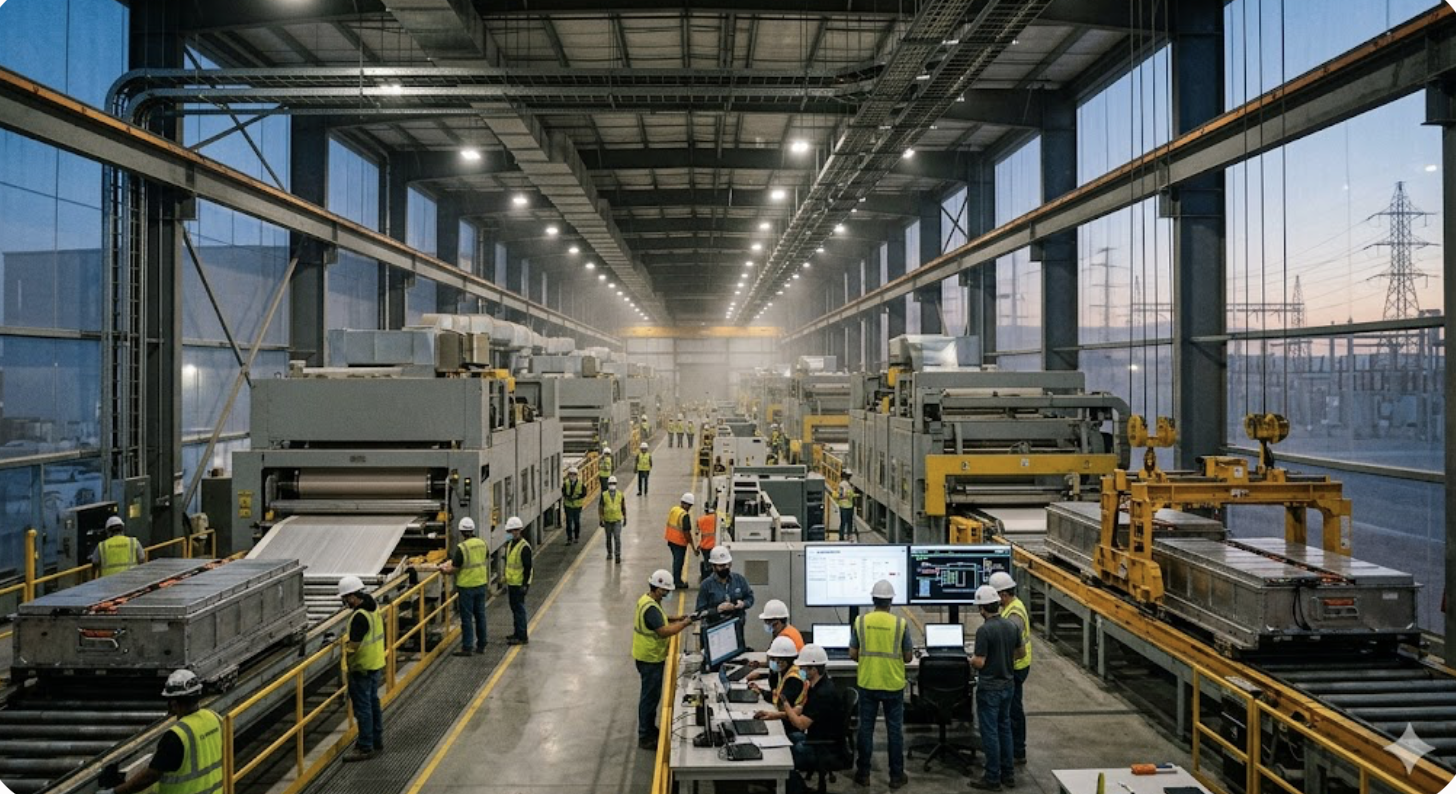
Manufacturing capacity surged in electric vehicles, batteries, and solar equipment. That created global overcapacity, and by 2023 battery output exceeded world demand severalfold. Finance shifted, too. Concessional loans gave way to government-backed venture capital through guidance funds that manage nearly $2 trillion in assets and support firms such as CATL and BYD. Human capital also expanded under the 2006 MLP, but frontier sectors still faced specialized shortages. Capability grew unevenly.
Rules favored domestic technology firms.
Institutional change centered on formalizing “indigenous innovation” and reshaping markets to favor domestic firms. The state embedded industrial policy in binding frameworks, including the 2006 Medium- and Long-Term Plan and the 2015 sectoral targets. That shifted policy from broad research support to targeted industrial upgrading.
Market access rules changed through subsidy allowlists and local content requirements. Those rules shut out foreign competitors from subsidized segments, especially batteries and electric vehicles. Government Guidance Funds built a hybrid public-private venture system, while state-owned enterprise procurement created demand for new technologies. The result was simple: state goals moved inside firm strategy and market structure.
Shocks revealed the system’s limits.
China’s technology drive reshaped political and social alignments around state-industry goals. Scientists, engineers, and business leaders entered coordinated planning structures, and more than 2,000 experts aligned with national goals. That gave the state a larger pool of technical authority.
Rapid expansion also created boom-bust cycles. In solar and batteries, overcapacity drove price collapses and consolidation. The system absorbed the global financial crisis and the tightening of geopolitical constraints on technology transfer by doubling down on domestic capacity. However, local government debt and inefficient capital allocation became systemic constraints. Those pressures now limit continuous expansion.
Competition and policy drove the result.
Local competition multiplied firm entry.
China increased variation through policy-driven entry and experimentation. Local governments competed for industry with subsidized land, cheap power, and equity injections. That created hundreds of firms in sectors such as electric vehicles.
The Hefei model shows how this worked. Municipal governments acted as venture capitalists, investing directly in firms such as NIO. Industrial strategy also split development into two tracks. Engineering-intensive sectors moved fast, while science-intensive sectors lagged. That wider experiment expanded the search space in clean energy and electric mobility.
Price wars forced firms to improve.
Selection worked through hard domestic competition and state constraints. Subsidized entry created oversupply, so price wars pushed inefficient firms out. Survivors such as BYD and CATL cut costs sharply to remain profitable while scaling production.
Regulation added another filter. Domestic sourcing targets and semiconductor self-sufficiency mandates imposed extra selection criteria. Limited access to foreign technology intensified those pressures, especially in semiconductors and advanced manufacturing. Competition selected for scale in batteries, but it could not close the knowledge gap in chips.
Infrastructure spread gains across sectors.
Diffusion sped up through exports, infrastructure, and state coordination. Firms learned by scaling production, and that learning spread across the production system. Ultra-high-voltage grids tied national energy systems together and locked in the use of clean technology.
Exports spread these gains abroad. Chinese firms came to dominate global markets in solar and electric vehicles. However, diffusion slowed in sectors that depended on foreign intellectual property. Technology transfer stayed constrained there, so semiconductors and aviation advanced more slowly.
The state set direction and paid.
Planning set targets and protected demand.
The Chinese state set the direction and aligned actors through long-term plans. The 2006 MLP and later industrial strategies named priority sectors and set measurable targets. The state also built coalitions across ministries, firms, and research institutions to coordinate action.
The state shaped markets with regulation. Subsidy safelists and local content rules redirected demand toward domestic firms. That protection gave national champions room to scale inside a managed competitive system. It helped batteries and electric vehicles grow fast, but it did not solve the chip problem.
Public money created capacity and demand.
Public investment focused on infrastructure and firm scaling. The state financed large grid projects to integrate renewable energy and build system-wide capability. It also provided subsidized credit, below-cost land, and direct equity investment to strategic firms, often through guidance funds.
Public services mattered too. Education systems produced large numbers of engineers and technicians to meet industrial demand. State procurement then created steady demand for new technologies, including electric buses and domestically produced aircraft. That support reduced early market risk.
The state adapted to failures.
The state adjusted its policy as constraints and failures emerged. It moved toward an “industrial policy of everything” as growth pressures rose and intervention spread into mature sectors. It also layered coal capacity alongside renewables to steady the energy system.
When large failures appeared, especially in semiconductor investments, the state responded with anti-corruption campaigns and restructuring. However, local fiscal constraints now limit how far it can repeat earlier high-risk models, including Hefei’s direct equity investment. The constraint is now inside the system.
Latin America will need to sequence.
Latin American and Caribbean policymakers face the same scaling problem, but at a much smaller scale. They must sequence their moves more carefully. Capital alone will not upgrade technology. Finance, skills, and infrastructure must move together, or investment will stall. The battery-chip contrast matters here, too.
Variation needs policy space. Entry and experimentation must come before selection, even if that creates early waste and overcapacity. But protection without competitive pressure will lock in weak firms and low productivity. Diffusion also depends on infrastructure and export strategy, because firms do not learn at scale without both. The trade-off is unavoidable. Fast technological gains can create fiscal stress, capital misallocation, and external backlash. So, the real policy choice is not whether to intervene. It is about tolerating waste long enough to build capability and stopping before the costs take over. China’s battery boom and chip limits bring the constraint into view.


Leave a Reply