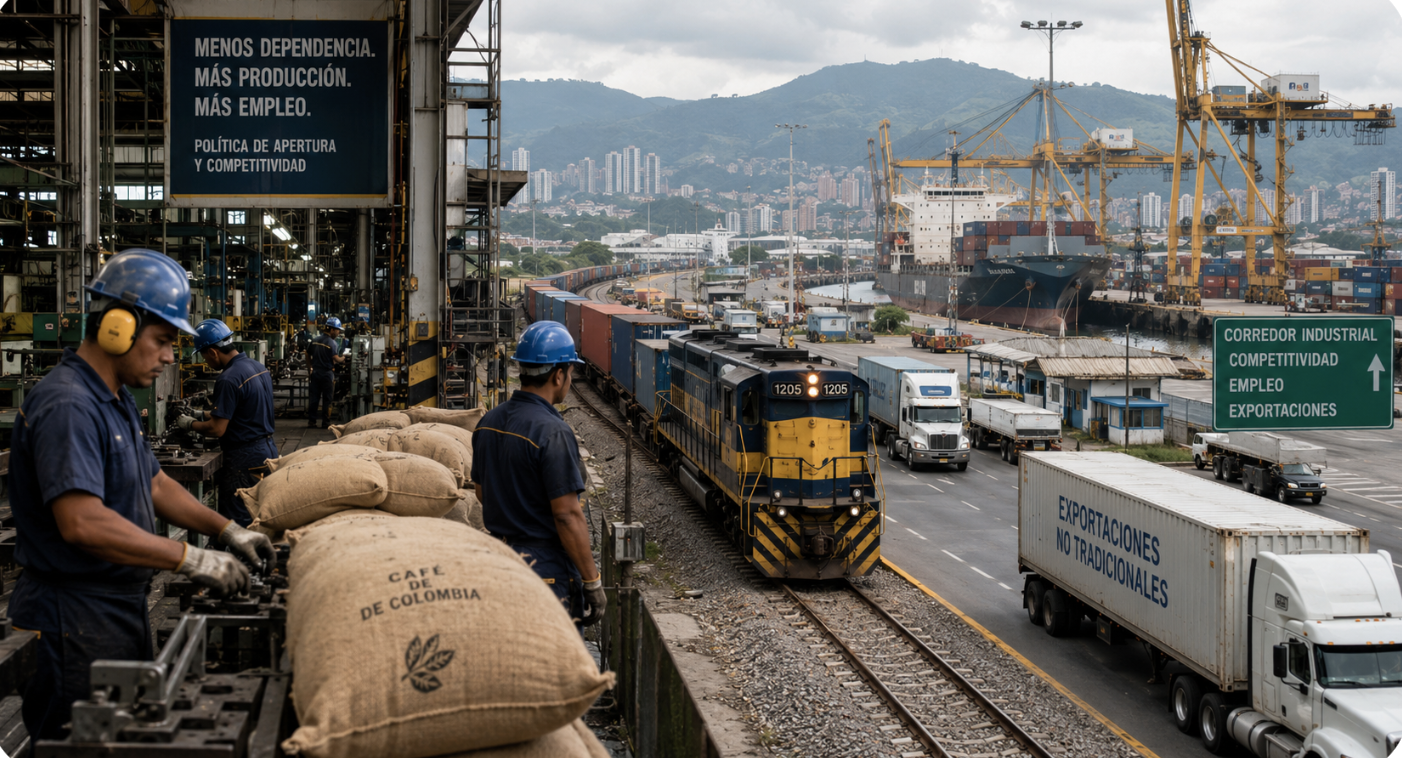
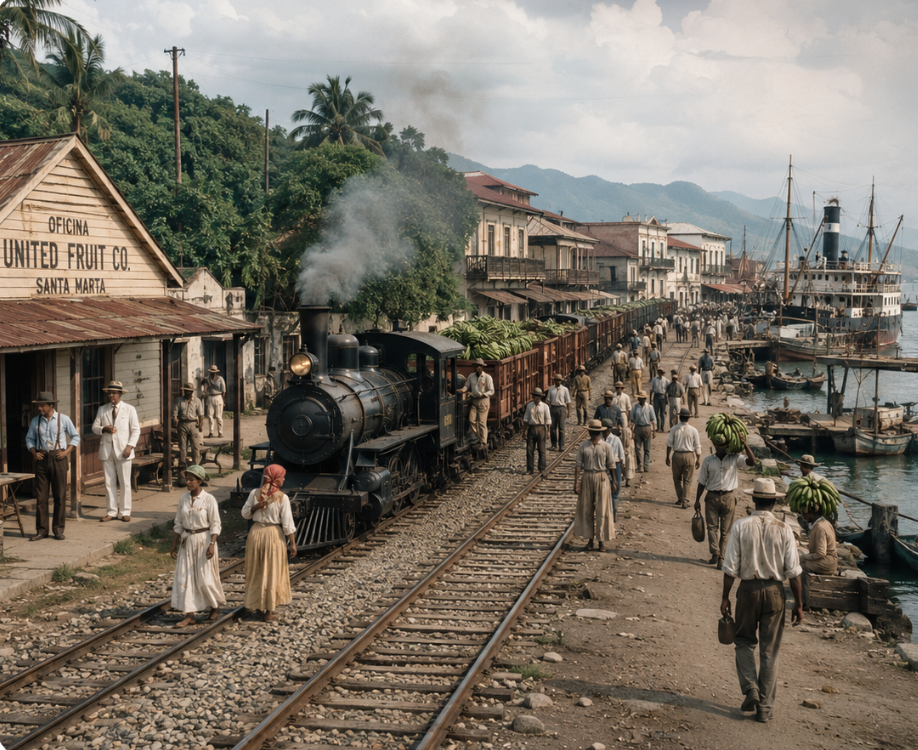
This index organises all research posts by theme and type, making it easy to navigate the evidence base for The Next Wave. Use the search bar below to find posts by keyword, or browse by category using the links.
Search all posts
Browse by category
📚 Research Case Studies
Historical and contemporary case studies that test the book’s framework against real-world evidence. Covers five centuries of technological revolutions, LAC commodity and industrialisation cases, small island economies, and international comparators from Korea to Germany.
🔬 Framework Essays
Conceptual posts that introduce and apply the book’s three analytical lenses: the Human Ecosystem Model, evolutionary economics (variation, selection, diffusion), and state-led transition theory. Start here if you are new to the book’s framework.
📋 Policy Briefs
Actionable posts for policymakers, mapping case study lessons to specific country types — from resource-rich large economies to small island states. Covers green transitions, digital transformation, industrial policy, and state capability building.
Browse by theme
Understanding the Framework
These Framework Essay posts introduce the book’s core analytical tools — evolutionary economics, the Human Ecosystem Model, and the five state functions for change — and explain the patterns of technological revolutions across history.
Five Historical Technological Waves (Chapter 5 evidence)
Posts on the five global revolutions: the First Industrial Revolution (Britain 1760–1830), the Age of Railways and Steam (1820–1880), Steel, Electricity and Telephone (1870–1920), Cars, Planes and Mass Production (1920–1970), and the Digital Revolution (1970–2020). Also includes a summary post on 300 years of revolutions and a forward-looking post on 2020–2070.
LAC Success Cases (Chapter 6 evidence)
Posts on cases where LAC countries built new capabilities or made successful transitions: Costa Rica’s distinctive development trajectory (1950–2010, including the Intel story), Uruguay’s energy transition (2010–2024), Chile’s renewable leap, Brazil’s renewable transformation, Mexico’s mobile leapfrog, and more.
LAC Challenges and Missed Opportunities (Chapter 7 evidence)
Posts on cases where resource endowments failed to deliver transformation: Peru’s guano and Chile’s nitrates, Venezuela’s oil boom, Ecuador and Trinidad oil cases, Brazil’s rubber vs. coffee contrast, Mexico under Díaz, Argentina’s export boom and its limits, and multiple Caribbean and Central American cases.
International Comparators
Non-LAC case studies that illuminate the book’s framework through contrast and comparison: Taiwan and Korea’s industrial miracle, Japan’s savings-led growth and land-tax industrialisation, Germany’s industrial rise and post-war recovery, Britain’s early industrialisation cycles, Estonia’s digital state, Norway’s EV transition, Denmark’s renewable shift, and China’s rapid scaling.
State Strategy and Getting Started (Chapters 9–11 evidence)
Posts on how states can build capabilities and manage transitions: the five state functions for institutional change, Chile’s copper and salmon sectors, Brazil’s Cerrado model, forestry institutions, green transition strategies, and digital transformation case studies.
All posts
-
Haiti 1970s: Authoritarian Growth, Fragile Gains
Many low-income countries periodically experience rapid growth spurts that appear to signal economic takeoff but later reverse—sometimes with lasting social damage. Haiti in the 1970s offers a clear case of real, visible, and internationally celebrated growth. Export‑assembly manufacturing expanded rapidly, foreign investment increased, and urban wage employment grew. Yet these gains rested on fragile foundations…
-
Jamaica’s First Decade, 1962-1972: Growth Without Inclusion
Jamaica’s first decade of independence illustrates how rapid, foreign-capital-driven growth can, unfortunately, go hand in hand with persistent unemployment and structural imbalance. Between 1962 and 1972, Jamaica’s output expanded substantially, infrastructure improved, and new industries took hold—yet social disparities widened rather than narrowed. Growth did not translate into broad employment or income gains, leading to…
-
Paying for Freedom
Haiti’s 1825 Indemnity and the Fiscal Roots of State Fragility In 1825, France imposed an indemnity on Haiti—about US$20 billion in today’s money—under direct military threat, nearly three times the republic’s estimated annual output. The payment was designed to compensate former colonists for the property the revolution had abolished. The fiscal consequences were immediate and…
-
When mahogany ran out: how Belize rebuilt its economy — and what the Caribbean hasn’t finished learning.
By 1960, sugar and citrus had overtaken timber as Belize’s primary export. What followed was not spontaneous market adjustment but a decade of deliberate governance — new institutions, realigned capital, and trade arrangements that made sugar scalable at speed. The same logic, and the same risks, runs through Caribbean development to this day
-
Ecuador Oil Boom (1972–1981): Growth and the State
In August 1972, oil began flowing through a newly completed pipeline across the Andes, and Ecuador’s economy changed almost overnight. Between 1972 and 1981, the country experienced one of the fastest growth episodes in its modern history, driven by the sudden start of large-scale oil exports. Real GDP grew at close to 9 percent per…
-
How Costa Rica Made EVs Scale
In 2015, Costa Rica registered fewer than 500 electric vehicles. By 2024, EVs accounted for more than 1 in 10 new registrations—powered almost entirely by renewable electricity. The country did this without oil money, without a massive industrial base, and across two major political transitions. That is the puzzle this blog tries to explain—and to…
-
Guyana’s Oil Boom 2015 to Today: Fast Growth, Hard Choices
Guyana has moved quickly to put in place the core governance for its windfall — the Natural Resource Fund, a local content act, and a rapidly expanding public investment program — as production and revenues scale. The question now is whether these systems are performing well enough to govern a larger spending envelope and deliver…
-
Dominican Republic: economic booms can hide financial fragility
In 2003, the Dominican Republic’s growth model collapsed, turning a boom into a national emergency. Three banks failed, depositors lost roughly US$2.2 billion, unemployment approached 20 percent, and the peso lost about half its value amid surging inflation. This was not a random accident: it was a sequencing failure—financial liberalization and fast credit growth ran…
-
Brazil’s Cerrado Growth Model: State Capacity and Land Governance
In 1960, Brazil imported food. In 2023, it supplied global markets at a scale that rivals the European Union’s agricultural exports. The Cerrado—roughly 200 million hectares—was long treated as marginal land; what changed was not the savanna but the state machinery around it. Brazil built public agricultural research and development, subsidized credit, and enabled infrastructure…
-
The Discipline Behind the Miracle: Learning from Taiwan and Korea
Many industrial policies share a common flaw: they are designed for success and unprepared for failure. Subsidies get extended, protection becomes permanent, and development banks accumulate risk without a clear plan to exit. Taiwan and South Korea’s experience between roughly 1955 and 1990 offers a structurally different model. In one generation, both converted agrarian economies…
-
Why Reforms Fail: Five Functions for Change in LAC
In 2013, Mexico’s energy reform looked like a textbook transformation package: a clear legal opening, new regulators, competitive processes to attract investment, and the promise of cheaper, cleaner, more reliable power. Within a few years, the trajectory shifted. Rules were contested, permits and contracts became politicized, and investors faced rising uncertainty. The problem was not…
-
Venezuela’s Oil Boom 1920–1970: Institutional Lessons
Venezuela’s oil boom between 1920 and 1970 represents one of the most compressed episodes of economic transformation in Latin American history, driven overwhelmingly by petroleum extraction. Real GDP per capita rose from roughly 20% of U.S. levels in 1920 to about 90% by 1958, growth unmatched elsewhere in the region during the period. This was…
-
How Chile Built Copper and Salmon Exports 1980–2010
Between 1980 and 2010, Chile moved from a volatile, copper-dependent economy toward a more complex export platform—still anchored in copper but complemented by a globally significant salmon aquaculture industry. The core policy challenge was not simply “grow exports,” but to convert a highly volatile copper rent stream into stable fiscal capacity, while building new tradable…
-
Trinidad & Tobago’s LNG Boom: 1998–2008
Trinidad & Tobago transformed its development trajectory between 1998 and 2008 (its “LNG boom”) by converting an underused natural gas reserve into a globally competitive liquefied natural gas export platform. Over this decade, real per capita income rose sharply, and foreign investment reached historic levels as the Atlantic LNG complex expanded from a concept into…
-
Mexico’s Mobile Leapfrog (1990–2010): Lessons for Transitions
Between 1990 and 2010, Mexico experienced one of the most rapid transformations in communications in the developing world. At the start of the 1990s, the country had fewer than five fixed telephone lines per 100 inhabitants, multi-year waiting lists for connections, and a geographically uneven copper network concentrated in major cities. By contrast, by 2007,…
-
Mexico 1994–2007: Growth Without Diffusion—Policy for Transitions
Between 1994 and 2007, Mexico carried out one of the most far-reaching economic reforms in Latin America. In little more than a decade, the country moved from a state-led, inward-oriented development model to a deeply integrated export‑manufacturing platform anchored in North American value chains. The scale of the transformation was substantial: foreign direct investment averaged…
-
Chile’s Renewable Leap: What LAC Can Copy—and What to Fix
Chile shows that clean power can be a competitiveness strategy—not just an environmental commitment. In one decade, the country moved from about 63% fossil-fuel generation in 2013 to a system in which renewables provided about 70% of electricity in 2024, with solar and wind accounting for roughly one-third of national generation. The hard part was…
-
The Playbook of Uruguay’s Energy Transition 2010–2024
In the early 2000s, Uruguay’s electricity system was exposed on two fronts: drought could collapse hydropower output, and the backstop was imported fossil energy, exactly when regional prices were high and regional supply could be uncertain. In severe years, Uruguay could spend as much as 2% of GDP on energy imports, turning weather into a…